Korčula Island
A guide through the history, culture and gastronomy of the island of Korčula — from Marco Polo to the medieval walled town.
Locirana mjesta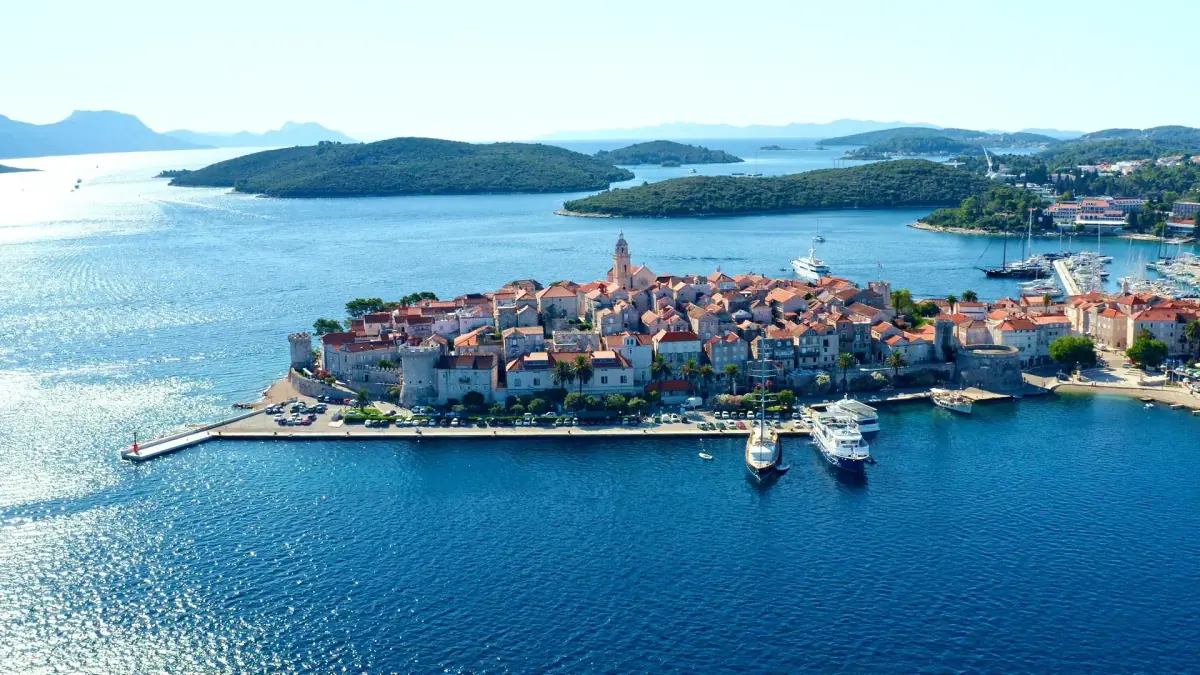
Marco Polo and Korčula
Travels and discoveries that left an indelible mark on history
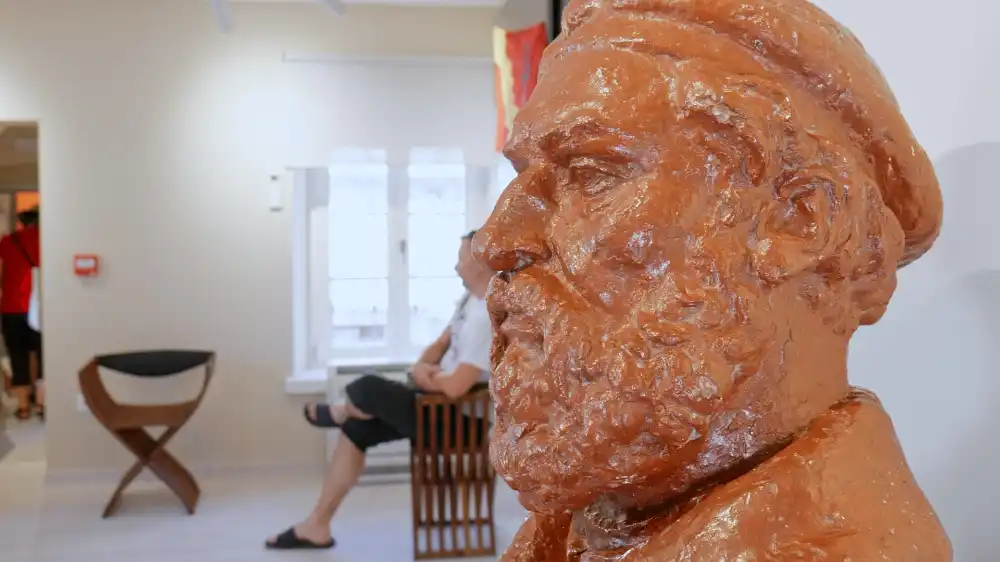
Marco Polo (September 15, 1254 – January 8, 1324) was a Venetian merchant, writer, traveler and explorer. Although he was not the first European to visit medieval China, he was the first to leave a detailed record of his travels.
The exact location of Marco Polo's birth is not entirely clear and is still subject to speculation. Most historians agree that he was born in the Venetian Republic and in the city of Venice. Some biographers claim that Marco Polo was born in the place of Korčula on the eponymous island, which was then part of the Venetian Republic.
His father Niccolo and uncle Matteo, who were traveling merchants, were also ambassadors of the Mongol Yuan dynasty to the Pope. On their second journey to China, 17-year-old Marco Polo accompanied them along the Silk Road. Marco Polo returned to Europe in 1295 and joined the war between Genoa and Venice with an equipped galley. He was captured in a naval battle between Venice and Genoa that took place on September 9, 1298 near the island of Korčula (Battle of Curzola).
During several months of captivity in Genoa, he dictated his travel experiences to fellow prisoner Rustichello da Pisa, who wrote them down (believed to have possibly added some of his own) in a book called "Il Milione" or better known as "The Travels of Marco Polo". In an era before the invention of the printing press, this book spread across Europe to unprecedented extents. It captivated the imagination of many Europeans and was recognized as the most important description of the world outside Europe of that time. The book allowed Europeans a better understanding of the Middle East, India, China and Japan, and inspired many future explorers, including Christopher Columbus and Ferdinand Magellan.
Niccolo, Matteo and Marco Polo set out on their journey in 1271 from Venice. They traveled inland, crossing Anatolia and Armenia. Then they descended to the Tigris River, possibly touching Mosul and Baghdad. They reached the port of Hormuz in the Persian Gulf, and through Persia and Khorasan came to Balkh and Badakhshan. In forty days they crossed the Pamir Mountains and reached the Tarim Basin. Through the Gobi Desert they came to the borders of China, to Tangut, the westernmost province of China. Then they continued along the northern part of the Huang He river circle and finally reached Khanbaliq (today Beijing), after a journey that lasted three and a half years. In China, Marco won the favor of Kublai Khan, became his advisor and later ambassador. After 17 years from departure, Marco Polo returned to Venice.
After the publication of Marco Polo's travelogue, he faced criticism, accusations and ridicule, with many claiming it was a series of lies and deceptions. Even on his deathbed, the priest who was to anoint him insisted on saving his soul and confessing that at least part of the content was not true, but Marco refused and replied: "I have not told half of what I saw, because I knew they would not believe me."
The question of whether Marco Polo visited China or not has attracted significant controversy. Most modern historians believe he did visit China, because many detailed descriptions of life in the Far East, such as paper money, the Grand Canal, the Mongol army, coal, wine production, asbestos, description of the tiger and the complex organization of the imperial postal system, confirm his travels to China. His mention of "Zipanga", which is the Chinese name for Japan, is the first recorded mention of that country in Western literature.
In 1323, Marco Polo was hospitalized due to illness. On January 8, 1324, despite the efforts and treatment of doctors, he passed away, leaving behind his wife (Donata) and three daughters (Fantina, Bellela and Moretta). He was buried in the church of San Lorenzo in Venice.
Marko Polo Centar
Town of Korčula
From the ancient walled town to the coastal gem of Croatia
The medieval part of the town rests on a small oval peninsula, while a baroque suburb adorns the periphery below the ancient city walls. Modern quarters stretch along the east and west coasts, and today about 3,000 inhabitants live in them.
As the administrative center of the region, the Town of Korčula encompasses the town and four villages — Žrnovo, Pupnat, Čara and Račišće — with a total of about 6,000 inhabitants. Korčula boasts a rich offer of social, cultural, economic and health institutions, including schools, a museum, a library, a medical center, tourist agencies, banks and hotels. The town also nurtures lively cultural-artistic societies dedicated to choral singing, folk dance and sport.
Immersing in historical roots, Emperor Constantine Porphyrogenitus, a Byzantine historian from the 10th century, was among the first to document the existence of a medieval walled town on Korčula. Although the exact location of this ancient settlement is still debated, remains of Romanesque architecture are yet to be discovered. However, evidence from the old city walls, decorations and archival documents allude to the existence of a walled town in the 13th century.
The subsequent rule of the Venetian Zorzi family marked a period of frequent administrative changes, which led to several reconstructions of the town and its structures. By the 15th century, the town experienced significant renovations, which ultimately turned it into a prominent town adorned with Gothic decorations and a distinctive character.
The stonecutting industry flourished in the second half of the 14th century, driven by the demands of Dubrovnik masters for high-quality stone. This collaboration between masters and local craftsmen spurred the growing stone-cutting industry on Korčula, which paved the way for Gothic decorations and the construction of significant public buildings and churches.
With the beginning of the 16th century came the age of Renaissance, in which previously unrenewed houses were revitalized with ornate facades and decorative columns. The core of the old town retained its Gothic charm during these improvements. The following centuries witnessed Baroque influences, as well as the growth of the Borgo suburb, the center of urban life and trade.
In the 19th century, Korčula gradually began to engage in tourism as its traditional crafts of stonecutting and shipbuilding declined. Small hotels and summer residences appeared near the town, meeting the needs of travelers seeking comfort on its picturesque shores.
After World War II, the town experienced a new phase of development, with the establishment of an industrial shipyard that required additional construction and infrastructure. Residential settlements were built on slopes overlooking the sea, while the old town was renovated for public use and preservation of historical heritage.
Today, Korčula stands as a vibrant coastal gem, proudly guarding its rich past while embracing the opportunities of modernity.
Žrnovo
A historical settlement of rich cultural heritage, home to prominent Croatian artists and writers
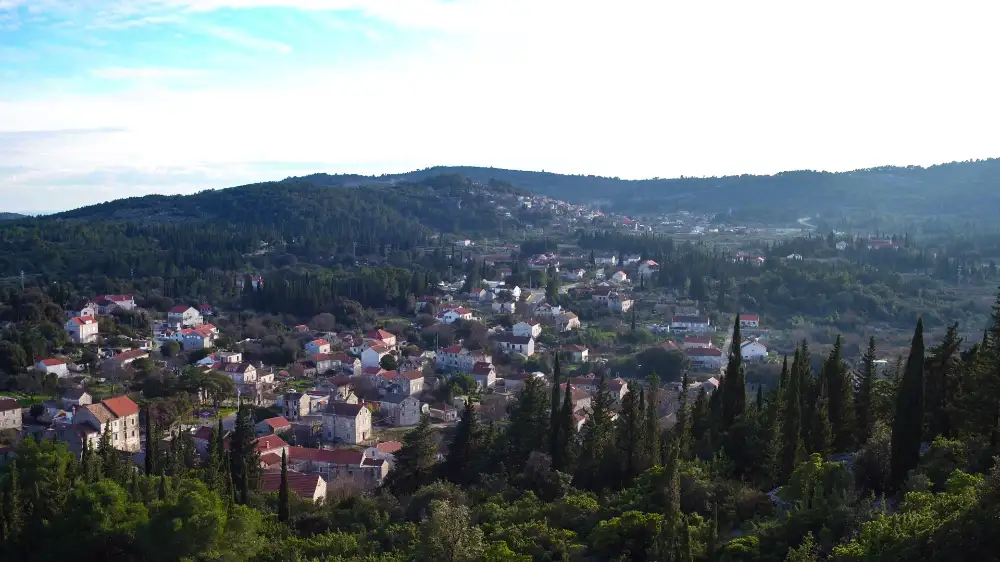
Currently, Žrnovo is a settlement with over 1,000 inhabitants, and its historical roots date back to the early Middle Ages. Located 4 km from the town of Korčula, the settlement is connected by a wide asphalt road that goes through the hills. Žrnovo consists of several hamlets, including Prvo Selo, Kampus, Postrana and Brdo. In the area there are old stone houses with porches and paved courtyards and small drywall sheds covered with stone slabs. In addition, there are residences of Korčula nobles and landowners.
The parish church of St. Martin, built in the 14th century and later renovated, is located on a shady hill surrounded by pine forest just outside the center of the settlement. In the hamlet of Postrana, situated on a hillside, there is the church of St. Roch and a paved square where the Mostra was traditionally held. The village also has the church of St. Vitus from the 13th century, as well as several other small old chapels. The Baničević Castle, owned by the distinguished noble family from Postrana, remained well preserved and has a plaque with the family coat of arms and a Latin inscription about their distinguished family member Jakov, a known European humanist who lived in the 16th century.
Historically, the people of Žrnovo were primarily farmers, they cultivated vineyards, olive groves and vegetables, and also engaged in stonecutting. Today, a large number of inhabitants are engaged in construction and tourism. In the nearby bays on the north coast, including Banja, Medvidnjak and Vrbovica, there are numerous modern family pensions and camps by the sea. The cultural-artistic association "Mišnice" in Žrnovo nurtures amateur theater and folk dance, and the association "Bratska sloga" explores local tradition and folklore.
Žrnovo was also the birthplace of several contemporary Croatian artists, such as Radoslav Duhović (sculptor), Nikola Skokandić (graphic artist), and painters Ante Radovanović, Frano Cebalo and Abel Brčić. The settlement can boast the renowned Croatian writer and academic Petar Šegedin.
Gastronomy
Explore the flavors of the unique cuisine of the island of Korčula
Despite a simple life and consuming basic foods, the islanders of Korčula developed a diverse and delicious cuisine that was aligned with their economic capabilities and food availability.
The scarce island soil allows for the cultivation of vegetables and fruits that play a key role in everyday diet. Additionally, special dishes from selected and more expensive ingredients are reserved for holidays and family gatherings, following established customs of when certain dishes are served.
Cooking primarily involves using homemade olive oil and homemade wine, which is not only consumed as a drink but also used as a seasoning. The recognizable island brandy lozovača is infused with aromatic herbs such as anise and rose petals, along with various sweet liqueurs and aperitifs prepared in a similar way.
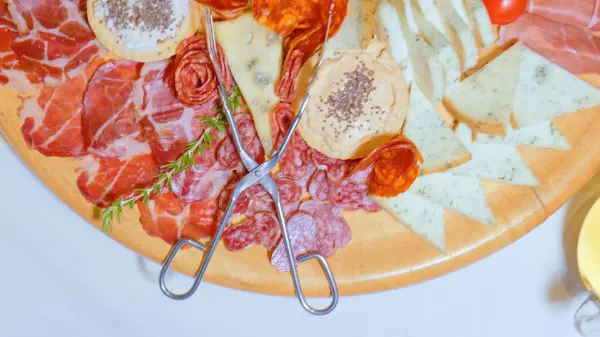
Among meats, delicacies include lamb, kid, mutton, prosciutto, game, beef, and a notable place in daily meals has fish, especially the more affordable "blue fish". During winter, salted fish such as sardines and gere provide a tasty and satisfying option when fresh catch is rare.
Fish is prepared in various ways — grilled, fried, boiled, and is often enjoyed in the form of a fine brudet with vegetables. Palenta, a porridge of coarsely ground corn grits, complements the brodet.
Island women skillfully produce cheese from sheep and goat milk. A popular treat are prikle — donuts with raisins and almonds fried in oil, which are often enjoyed on fasting days or on special occasions such as Good Friday and Christmas Eve.
At ceremonial events such as weddings and baptisms, a wide range of sweets are prepared, including cukarine, klasune (cakes filled with almonds), krokant (almonds in yellow sugar), hrostule (fried donuts), kotonjate (quince jelly) and many more.
Autochthonous herbs have a dual role — they serve as both medicinal aid and an ingredient in herbal teas. Islanders use rosemary, laurel, basil, sage, mint, marjoram and orange and lemon leaves for these purposes.
Island restaurants, pastry shops and wine cellars proudly serve these excellent specialties that reflect the rich culinary heritage of Korčula.